
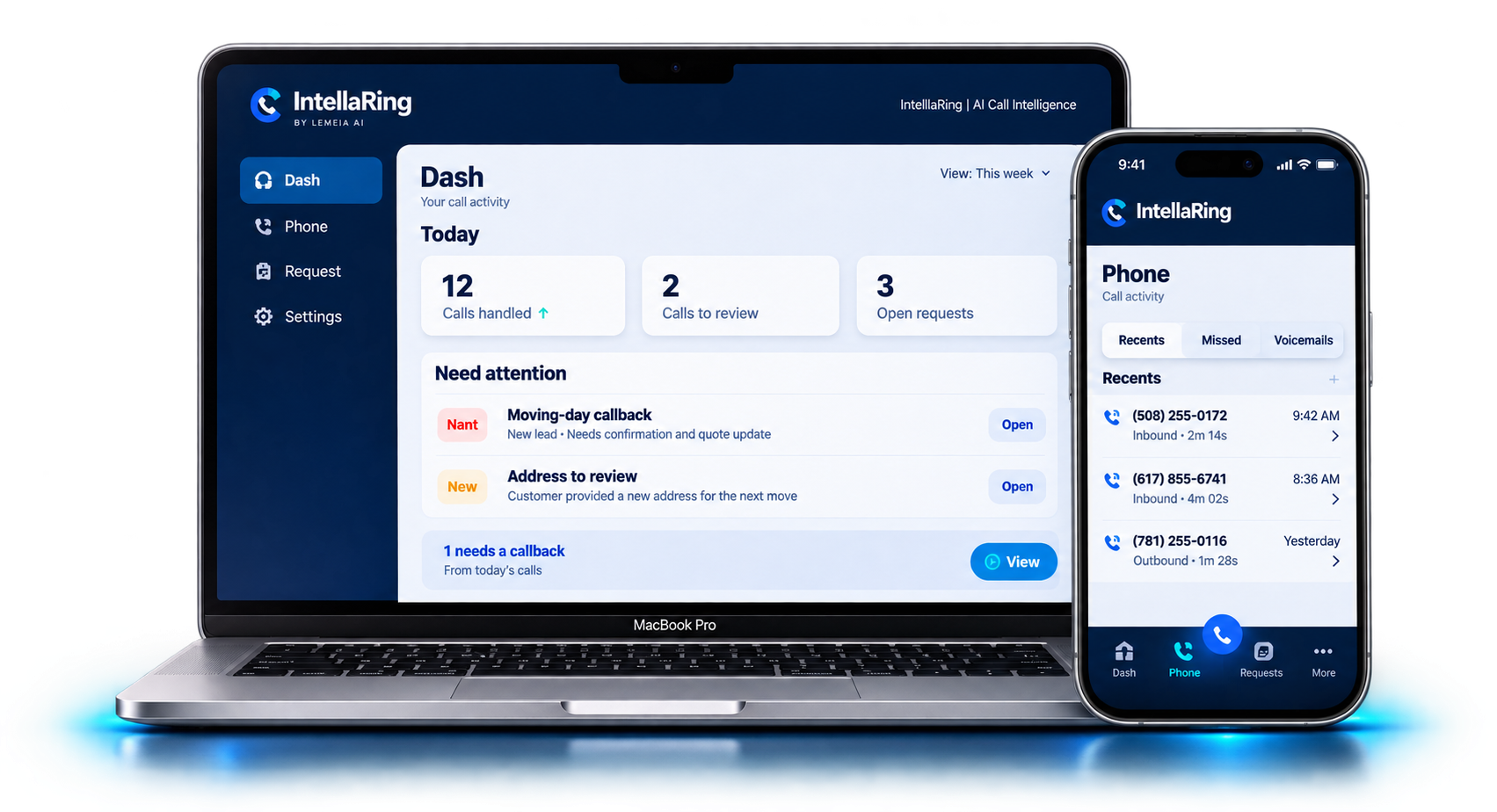
When the office gets busy, the missed ring is rarely the whole problem. The real gap is what follows: someone assumes a colleague called back, a voicemail gets copied into two systems, or a time-sensitive request sits with the wrong team. A shared workflow makes the next action visible.
01
Decide what counts as a missed call
Start with the call’s result and the coverage in effect at that moment. A call answered by another team member or an AI receptionist has a different outcome from an unanswered call. An office-hours call assigned to an available person should be measured differently from one that arrived outside their shift.
Keep unknown outcomes visible. If a carrier or forwarding route doesn’t confirm who answered, leave ownership unconfirmed until the team can check the call history.
02
Give each callback an owner and a deadline
For a missed inquiry, record the business line, callback number, time received, owner, and due time. Let staff distinguish an attempted callback from a conversation that actually connected. That difference matters: dialing once does not necessarily resolve the caller’s request.
- Choose a response target that fits your team’s coverage.
- Route urgent service issues separately from routine inquiries.
- Reassign a callback when the owner is unavailable and retain that history.
03
Keep the context close to the call
A short note should explain why the person called and what the team should do next. Where recording and transcription are configured with appropriate consent, link to the original conversation. Mark an uncertain address or inventory detail for review so a plausible transcription error does not become a confirmed CRM field.
04
Check the workflow with one business line
Start with a week of call outcomes and compare time to first attempt, time to contact, and overdue callbacks. Look at a few outliers with the team to see whether staffing, routing, or a missing owner caused the delay. If multiple brands share an office, retain the verified line or route that received each call.
IntellaRing gives teams a place to review calls and follow-ups together. Configure the phone line and coverage first; add other lines or a CRM connection after you can trace a missed call to its next action.
Continue from here
Put the guide in context.
This article represents Lemeia AI’s firm-level point of view. It is general business information, not legal, financial, security, tax, or professional advice for a specific situation.
How this content is developed →