
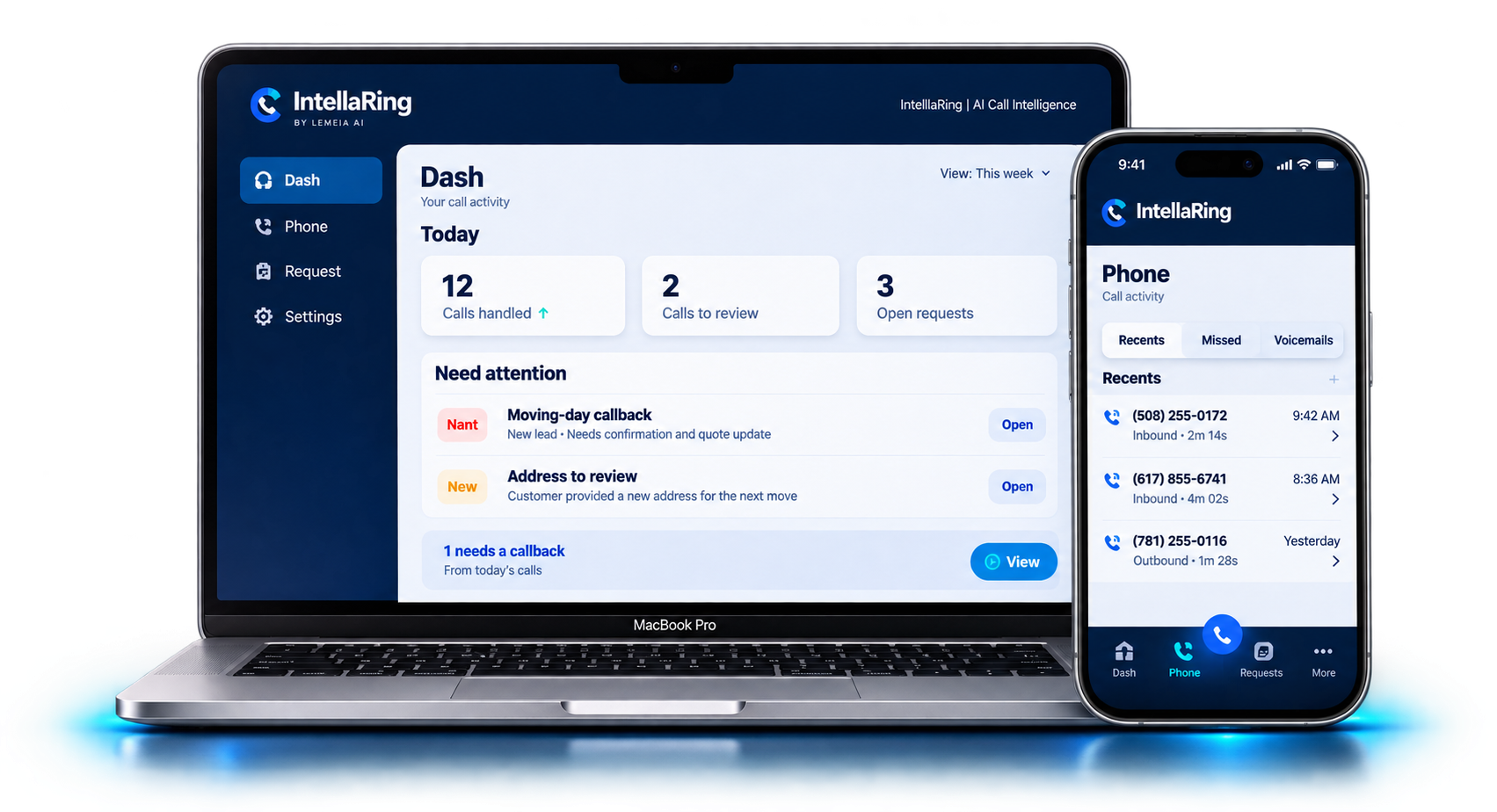
A good AI receptionist should leave the next person with less work. That starts with a small set of approved answers, a clear handoff, and a way to tell whether the details reached the right system.
01
Give the receptionist a useful first assignment
Choose a common request, such as a new estimate or an after-hours callback. Approve the business facts the agent can answer: service areas, hours, basic pricing rules, and who handles exceptions. Keep each company’s policies separate, even when it shares a front desk with another brand.
02
Separate collected details from confirmed changes
If a caller corrects a street number, read back the corrected number and save it as a suggestion until verified. A request for a new appointment date or a price exception needs the appropriate availability check or human approval. Staff should be able to see the caller’s original request and what remains open.
- Use a stable company and call ID for routing and reconciliation.
- Escalate sensitive requests and promises outside approved policy.
- Give staff the reason for the handoff and the details already collected.
03
Verify that the CRM accepted the update
A transcript, a summary, and a CRM receipt tell you different things. Confirm the target company and record type before delivery, then save the accepted record ID or a clear failure. On a timeout, check whether the first request succeeded before retrying. Use a stable event key so the same call does not create duplicate leads.
04
Test the uncomfortable calls before going live
Try a correction, a noisy line, a caller who declines recording, and a human transfer when the destination is unavailable. Make sure the fallback can still collect a callback request. Review which details were verified and which were left for staff.
IntellaRing supports these workflows through company setup and an API. Use its guided demo to see the flow, then test your own phone routing and CRM delivery before relying on them for customer calls.
Continue from here
Put the guide in context.
This article represents Lemeia AI’s firm-level point of view. It is general business information, not legal, financial, security, tax, or professional advice for a specific situation.
How this content is developed →